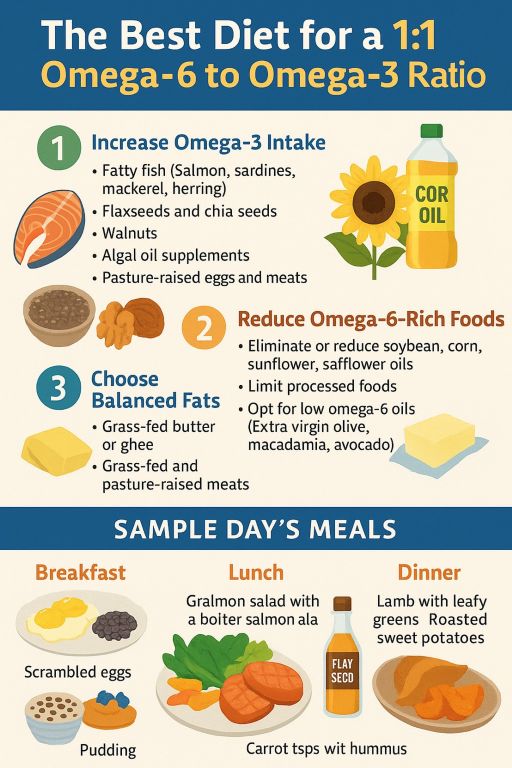
Omega-6 fatty acids (e.g., linoleic acid) are mainly found in seed oils (soybean, corn, sunflower) and processed foods.
Omega-3 fatty acids (e.g., ALA, EPA, DHA) come from flaxseeds, walnuts, fatty fish, and grass-fed meats.
| Ratio | Health Impact |
|---|---|
| 1:1 to 4:1 | Anti-inflammatory, optimal health |
| 5:1 to 10:1 | Borderline; increased risk |
| 10:1 and higher | Pro-inflammatory; chronic disease risk |
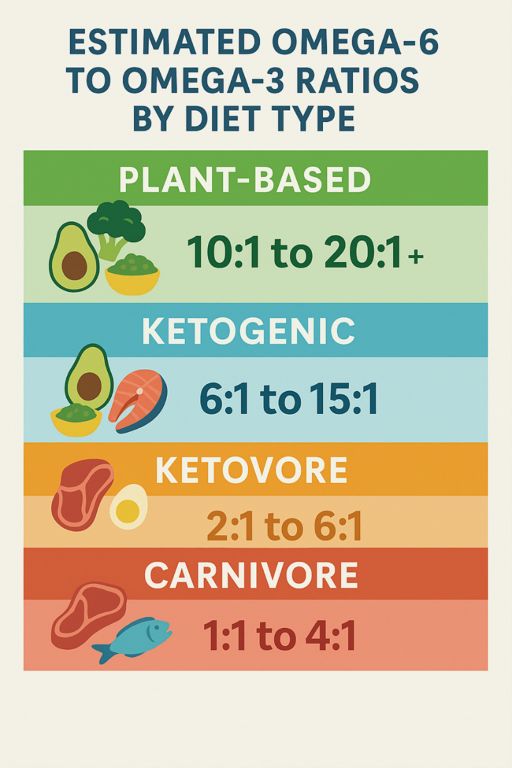
| Diet Type | Estimated Omega-6:Omega-3 Ratio | Notes |
|---|---|---|
| Plant-Based | 10:1 to 20:1+ | High omega-6 from seed oils, limited EPA/DHA. |
| Ketogenic | 6:1 to 15:1 | Varies by fat sources; better with animal fats. |
| Ketovore | 2:1 to 6:1 | More balanced with grass-fed and fatty fish. |
| Carnivore | 1:1 to 4:1 | Best balance with grass-fed/wild-caught sources. |
Note: Grass-fed meats tend to have a more favourable omega-6 to omega-3 ratio compared to grain-fed counterparts.
Fish, especially oily varieties, are rich in omega-3 fatty acids, contributing to a low omega-6 to omega-3 ratio.
Vegetables typically have low total fat content but can contribute to omega-3 intake, especially leafy greens.
Fruits generally have low fat content, but some tropical fruits contain small amounts of omega-3 fatty acids, leading to favourable ratios.
Maintaining a balanced intake of omega-6 and omega-3 fatty acids is important for health. Modern diets often have higher omega-6 levels due to processed foods and certain vegetable oils. Incorporating foods with favourable omega-6 to omega-3 ratios, such as fatty fish, leafy greens, and certain fruits, can help achieve a healthier balance.
The omega-6 to omega-3 ratio of milk and cream depends significantly on the source of the milk (e.g., grain-fed vs. grass-fed animals) and the processing.
| Type | Omega-6:Omega-3 Ratio | Notes |
|---|---|---|
| Conventional Milk | 5.7:1 | Lower in omega-3 |
| Organic Milk | 2.3:1 | Higher omega-3 than conventional |
| Grass-Fed Milk | 0.95:1 | Richest in omega-3s |
| Conventional Cream | ~5.7:1 | Assumed similar to conventional milk |
| Grass-Fed Cream | ~1:1 | Assumed similar to grass-fed milk |
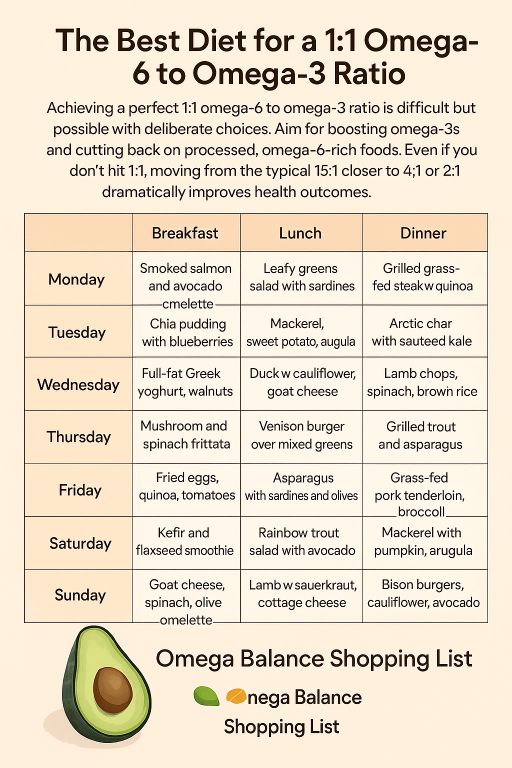
| Day | Breakfast | Lunch | Dinner |
|---|---|---|---|
| Day 1 | Chia pudding with flaxseed, walnuts, and blueberries | Wild-caught salmon salad with olive oil vinaigrette | Grass-fed beef stir-fry with spinach, kale, and broccoli in butter |
| Day 2 | Scrambled pasture-raised eggs with avocado and tomato | Mackerel fillets with quinoa and steamed asparagus | Lamb chops with roasted Brussels sprouts and sweet potatoes |
| Day 3 | Greek yoghurt with chia seeds, almonds, and raspberries | Sardine and avocado lettuce wraps | Free-range chicken with cauliflower mash and sautéed kale |
| Day 4 | Omelette with spinach, mushrooms, and goat cheese | Arctic char with mixed greens and olive oil dressing | Venison stew with root vegetables and herbs |
| Day 5 | Smoothie with flaxseed, spinach, banana, and kefir | Grass-fed burger (lettuce bun) with sauerkraut and avocado | Duck breast with roasted parsnips and green beans |
| Day 6 | Cottage cheese with flaxseed and kiwi | Rainbow trout with brown rice and bok choy | Pasture-raised pork tenderloin with mashed pumpkin and spinach |
| Day 7 | Buckwheat pancakes with walnut butter and blueberries | Tuna salad with olives, tomatoes, and boiled eggs | Bison steak with arugula and avocado salad |